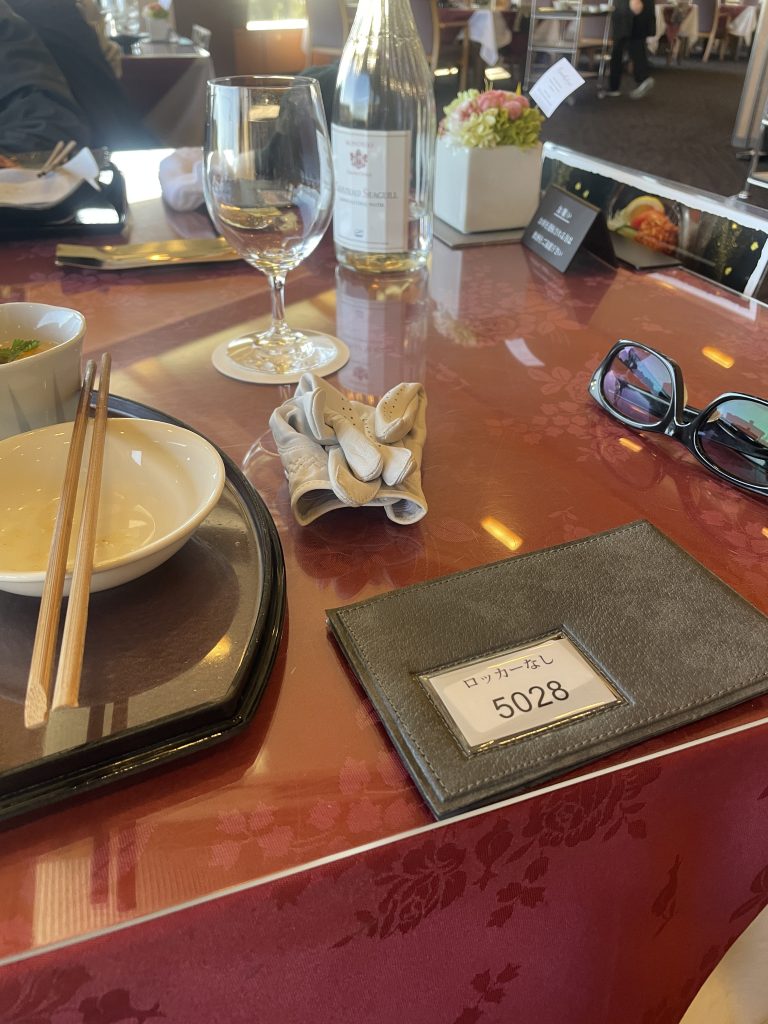
For many overseas golfers, the unexpected part of a Japanese round is stopping after nine holes for lunch. At a large number of 18-hole courses, the normal schedule is the front nine, a clubhouse break and the back nine. Continuous 18-hole Through Play exists, but availability depends on the course, season and plan.
The common 9–lunch–9 format
When the front nine finishes, follow the cart route to the clubhouse or turn area. Staff normally confirm when your group will begin the back nine. The break helps the course operate the two starting sides and restaurant service as one timetable.
The break is not always the same length. Course traffic, weather, competitions and the pace of the morning field can all affect it. Treat the time given on the day as authoritative.
A break of roughly 40 to 60 minutes is common in many ordinary schedules, but it is not a guaranteed national standard. The usable dining time is shorter once the group walks in, finds its table, orders and returns to the starting area. Choose promptly when the slip shows a short turnaround.
Your afternoon start time
Your group may receive a printed slip showing the back-nine start time. Keep it on the table or with the account card. The stated time means ready to start, not beginning to leave the restaurant.
Return to the cart about five minutes early, after allowing for the restroom and the walk from the dining room. Confirm whether the back nine begins from the OUT or IN side and that every player is present.
If the front nine runs late, staff may adjust the afternoon time to fit the operation. Do not assume the original timetable still applies without checking the slip or staff instruction.
Keep the whole group aware of the revised time. One person waiting at the cart does not protect the booking if the other players are still shopping or changing clothes. A group leader can give a simple five-minute reminder before everyone leaves the table.
Lunch allowance and surcharges
“Lunch included” often means a meal allowance up to a stated amount. Dishes within that allowance have no meal surcharge; a higher-priced selection requires payment of the difference. Drinks may be separate.
Orders are commonly recorded against the locker key or account card number and included in final settlement. This is convenient, but it also means players should keep their own account item and check the final statement.
A plan can separate lunch from other items. Locker use, towels or the bath may have their own conditions. Compare the whole plan rather than only the first price shown.
Dietary requests should be raised before the day whenever possible. A restaurant may be able to identify ingredients or offer a limited alternative, but this must be confirmed rather than assumed. The lunch allowance does not guarantee a particular vegetarian, allergy-safe or religious-diet option.
Weekday, weekend and holiday plans
Meal inclusion can differ between weekday and weekend or public-holiday bookings at the same course. One plan may include an allowance while another does not. Read the exact plan notes for the booked date.
There is no need to speculate about the reason for a particular package. The operational point is simply to confirm whether lunch is included, the value of any allowance and how surcharges are settled.
How Through Play works
Through Play normally means continuing from the front nine to the back nine without a formal clubhouse lunch break. Early-morning Through Play is common at some courses, and other courses offer it seasonally or only under selected plans.
It does not guarantee an uninterrupted four-hour round. If the front nine runs late or the course needs to manage the field, a short wait may still be inserted. Some plans provide food after 18 holes; others exclude lunch. Locker and bath access must also be checked separately.
An early-morning plan can require arrival before normal restaurant or reception hours. The course may use a different check-in desk, payment sequence or locker arrangement. Follow the plan-specific instructions sent with the booking rather than copying the routine from a standard daytime round.
Never build a tight onward schedule around the word “Through” alone. Confirm the tee time, expected transition, meal timing and the course’s right to adjust the operation.
Transport planning
The first group and last group in a private party can finish at different times. Club checks, changing, bathing, individual payment and bag loading follow the final hole. The vehicle departure therefore cannot be based only on the first group’s theoretical finish.
Miramar builds the meal format and realistic clubhouse time into transport planning. A late field or operational pause can lead to vehicle waiting or overtime under the transport arrangement.
For the full sequence around the break, read what to expect on a day of golf in Japan. The four details to confirm are the afternoon start, meal inclusion, allowance value and whether the course can alter Through Play on the day.
Groups should also agree how individual restaurant extras will be paid. Where each player has a numbered account, separate settlement is straightforward; where the organiser holds a master arrangement, the booking confirmation should state what remains personal.