A first round in Japan can feel unfamiliar before you have even reached the first tee. Golf bags may be taken at the entrance, purchases are often charged to a numbered account, and many 18-hole courses schedule lunch between the front and back nines. None of this is difficult once the order is clear.
Most 18-hole golf courses in Japan commonly use a front nine, lunch break and back nine format, while some courses offer Through Play. The exact routine, inclusions and timings depend on the course and booking plan, so use this as an operating guide rather than a universal rule.
Before you arrive
Plan to reach the clubhouse at least 30 minutes before your tee time. Forty-five to 60 minutes is more comfortable for a first visit, a group check-in, club hire or a practice-ground visit. The tee time is when your group is expected to start, not when registration begins.
Make sure every golf bag has a clearly visible name tag matching the booking list. Roman-letter names are particularly helpful for overseas groups. Keep passports, wallets, medication and clothes in your hand luggage rather than deep inside the golf bag, because the bag may move directly to the course-operation area.
Review the booking confirmation before travel. Locker use, lunch, cart fees, practice balls and rental equipment may be included, optional or charged separately. Weekday plans can differ from weekend and public-holiday plans at the same course.
For a group transfer, allow time for traffic, unloading and matching every bag to the player list. A coach reaching the gate 30 minutes before the tee time does not mean the players are ready to start. Miramar normally plans a wider arrival margin for several groups, first-time visitors or a course with a separate practice area.
Bag drop and registration
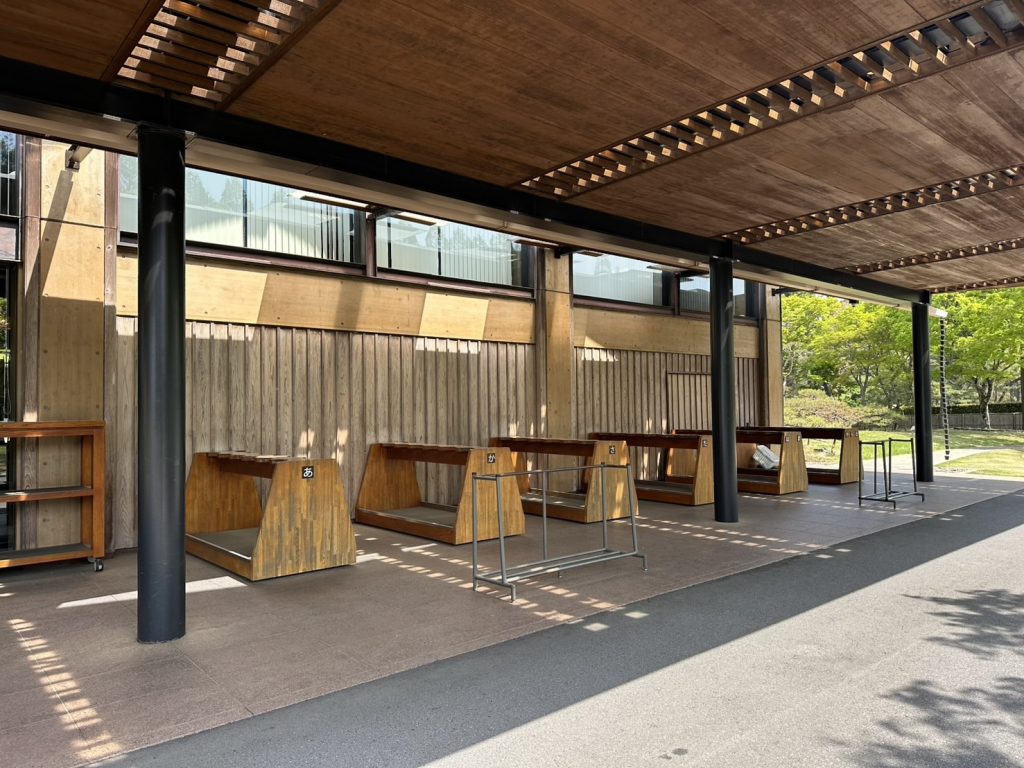
At many courses, staff take golf bags from the vehicle at the clubhouse entrance. Other courses use a self-service bag rack, where players place their own bags in the marked area. Follow the signs or staff direction rather than leaving a bag beside the vehicle.
Inside, give the front desk the booking name. You may be asked to complete a personal-information card and sign it. A group leader should carry the confirmed player list, group order and hire-club details, using the same spelling as the reservation.
After registration, the course normally issues a locker key, key holder or account card with a number. Keep it with you. Restaurant orders, pro-shop purchases and other clubhouse spending may be recorded against that account and settled at the end of the day. A locker fee can be separate even when green and cart fees have already been paid or arranged.
If a member of the group cannot complete the registration card comfortably, the group leader can ask staff for help rather than guessing. Personal details and signatures should belong to the player concerned. Keep passports secure; they are not normally something to leave at the golf counter.
More formal clubs may have specific arrival clothing rules, while resort and public courses can be more relaxed. Check the course rather than assuming one national standard; our article on Japanese golf course dress codes explains the distinctions.
Getting ready for the first tee
Change in the locker room, then confirm your cart, group number and starting side. Eighteen-hole rounds may begin from the OUT or IN nine. Arrive near the starting tee about ten minutes early with balls, tees, a pitch-mark repairer and glove ready.
Japanese courses use several cart systems: rail-guided automatic carts, remote-control carts and player-driven carts. The screen may show hole maps, distances and the position of the group ahead. Do not operate a cart until you understand its controls. Fairway access is never implied simply because a cart is provided. See how golf carts work in Japan for the operating differences.
Front nine, lunch and the afternoon start
After the front nine, staff usually tell you the back-nine starting time or hand your group a printed slip. Keep that time visible. It is the time to be ready at the cart, not the time to leave the restaurant. Aim to return about five minutes early.
Lunch inclusion depends on the booking plan. A plan described as including lunch may provide an allowance rather than every dish at no extra cost. Higher-priced meals and drinks can create a surcharge, recorded to the same account card. Weekend and holiday packages may have different meal conditions from weekday packages, so check the plan wording instead of relying on a previous visit.
The break length varies with the course and the day’s operation. Eat at a comfortable pace, but allow time for the restroom and the walk back to the cart. Lunch breaks and Through Play covers allowances, afternoon slips and continuous-play plans in more detail.
During both nines, keep up with the group ahead without crowding them. Prepare clubs before your turn, leave the green promptly and repair the ground you have affected. The practical expectations are set out in Japanese golf etiquette and pace of play.
Bath, payment and bag collection
After the 18th hole, check every club before signing any bag-confirmation sheet. Clean your shoes in the designated area and take valuables back to the locker room. Many Japanese clubhouses have a communal bath. Bathing is optional, and course rules—including policies on tattoos—vary. If the group has a fixed departure, change promptly rather than assuming everyone will use the bath.
Take the locker key or account card to reception or an automatic payment machine. The final amount may combine golf charges, the locker, restaurant spending and shop purchases. Payment methods vary, so carry an accepted card and some yen unless the course has confirmed otherwise.
Return the key as directed and collect the correct golf bag from the handover area. Check the name tag and club count before loading. A group leader should count both people and bags before the vehicle departs.
What Miramar coordinates for groups
For a private group, the final player can finish well after the first group. Club checks, bathing, individual payment and bag loading add more time. Miramar coordinates the booking list, group order, vehicle capacity and the handover between course and driver so these practical steps are reflected in the itinerary.
Golf can also run late because of course traffic, weather or an operational pause. When a chartered vehicle waits beyond the planned service period, vehicle overtime may apply under the transport arrangement. We therefore avoid fixing dinner or a long onward journey to an unrealistically early departure time.
The useful principle is simple: arrive early, keep the account item safe, follow the day’s instructions and allow the whole group to complete the clubhouse routine. Once the sequence is familiar, a day of golf in Japan feels orderly rather than complicated.