
A golf day in Japan usually occupies most of the day. The visible part is the round, but the operating plan also includes hotel departure, bag unloading, club check-in, changing, a possible lunch break, post-round settlement and the return transfer.
For overseas groups, the difference between a relaxed day and a rushed one is usually timing. Build the schedule backward from the confirmed tee time and forward from a realistic finish window.
A typical golf-day timeline
| Stage | What happens | What the group leader should confirm |
|---|---|---|
| Hotel departure | Players assemble and bags are loaded | Wake-up, breakfast, traffic buffer, correct vehicle |
| Course arrival | Staff receive golf bags; guests enter the clubhouse | Group name, booking name, number of bags |
| Check-in | Each player or the group completes registration | Payment method, locker access, account card or key |
| Preparation | Change, collect rental items, warm up if time allows | Dress code, rental clubs/shoes, practice facilities |
| First nine | Groups start at assigned times | Pairings, cart/caddie instructions, local rules |
| Lunch or turn | Many courses schedule a break | Restart time and meeting point |
| Second nine | Play resumes on the assigned course | Pace and final-group timing |
| After the round | Bathing/changing, settlement and bag collection | Departure meeting time, individual charges |
| Return transfer | Vehicle departs for hotel or next destination | Traffic buffer and dinner reservations |
The exact sequence varies by course. Some courses offer through-play, while many schedule a lunch break between nines. Confirm the arrangement for the booked date rather than relying on a general description.
Official reference: the JNTO Golf Guide explains common booking, lunch-break, attire and clubhouse practices.
Before leaving the hotel
The group should meet earlier than the vehicle departure time. Golf bags, day bags and any luggage need to be identified before loading. If the group changes hotel after golf, the vehicle plan must account for the complete travel load.
The night before, confirm:
- departure and meeting time;
- course and booking name;
- tee times and pairings;
- dress code;
- rental club or shoe requests;
- weather plan;
- who carries passports, valuables and medication;
- the post-round destination.
For an early tee time, check whether hotel breakfast is available. A packed or alternative breakfast may be needed.
Arriving and checking in
At many Japanese clubs, golf bags are unloaded at the entrance and routed separately to the carts. Players enter the clubhouse and check in at reception. Procedures vary: some clubs create an account card or locker key used for purchases, while others require different payment handling.
An organized group should have one booking list with names in the same form used for the reservation. The leader should know whether each player settles individually or the organizer pays specified charges.
Tee times are group appointments
A tee time belongs to a playing group, not merely to one person. Multiple groups need an agreed order and enough time for every player to be ready. The course decides the starting side and operational sequence.
IN and OUT starts, consecutive times and pairing requests may be available, but they are not entitlements. The final confirmation should show the time and start side for each group.
Players should be at the designated starting area before their time. Late arrival can affect the group and the course’s schedule, so the transport plan needs a buffer.
Cart, caddie and playing arrangements
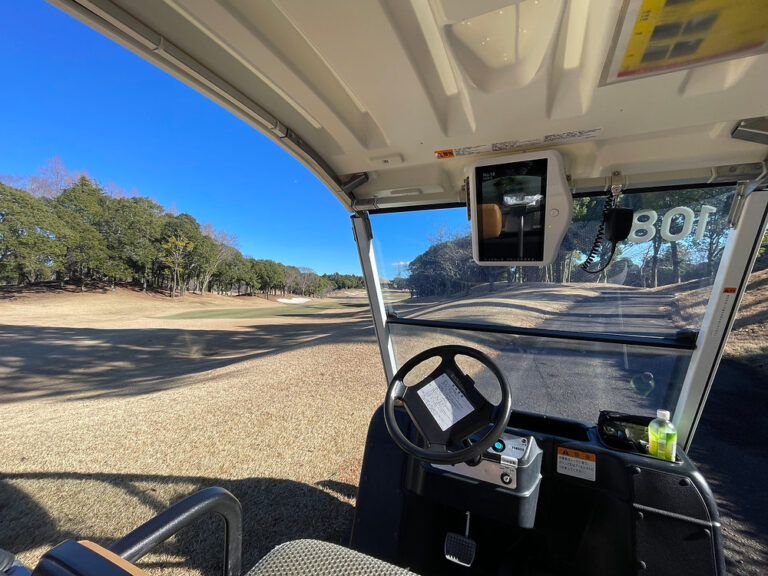
Cart and caddie formats differ by course and date. A cart may be self-operated, remotely controlled or restricted to a path. A caddie may be mandatory, optional or unavailable. Language support should not be assumed.
Before play, confirm the course’s instructions and local rules. Rental equipment should be reserved in advance with handedness and other key requirements stated clearly; availability and specifications are subject to the course.
Lunch and the restart time
At courses with a scheduled lunch break, the group receives a restart time after the first nine. Lunch is part of the operating day, not unplanned free time. Players need to watch the restart time even if food service is busy.
If the group has dietary needs, raise them before the booking is finalized. A course restaurant may have fewer options than a city hotel, and special meals cannot be assumed.
After the round
Many clubhouses have changing and bathing facilities. Bathing is optional, but the itinerary should allow enough time for those who use it. Purchases, individual settlement and bag collection can also delay departure when several groups finish at different times.
Set one vehicle meeting time based on the last group’s realistic finish. If the early groups depart separately, that should be planned in advance rather than improvised.
What is different for an overseas group
The course may need English-name lists, rental requests, payment coordination and a contact who can respond in Japanese. The transport operator needs a reliable finish window. The organizer also needs to explain local procedures without claiming that every course works the same way.
Miramar’s role is to connect those details: tee-time confirmation, group list, private movement and the day’s onward plan.
Plan one complete golf day
For a standalone round from a city hotel, review Miramar’s Private Golf Day. For a longer route, explore Japan Golf Tours. To request a proposal, send the date, player count, hotel and equipment needs.